Showing posts with label iOS. Show all posts

Apple sends out event invites for October 16: 'It's been way too long'


Apple has officially sent out invitations for its upcoming event to debut the highly-anticipated new iPad Air 2, iPad Mini, and new Mac computers.

The iPad Mini and iPad Air 2 are both expected to ship with the all new A8 processor and the popular Touch ID fingerprint scanner. The new iPad Air 2 is expected to be a mere 7 mm thin, compared to the 7.5 mm of the original iPad Air and it expected that it will be the first Apple device to come with 2 GB of RAM.

This event will take place in Cupertino, California October 16th, at 1 PM eastern time. Among other things, Apple is expected to talk about iOS 8.1 which will launch Apple Pay and maybe even  another glimpse at the Apple Watch.

For more information, stay tuned.

Source

Smartphone debate: Metal vs. Plastic

One of the hottest debates surrounding smartphones in the past few years have been whether phone manufacturers should have their devices come in metal or plastic. It all comes down to premium vs. cheap feel. Consumers pay hundreds of dollars for smartphones, and they want the biggest bang for their buck; which most people will say is a phone that comes with metal in the form factor.

As of late, it seemed as if this debate was all over. HTC, Samsung, and of course Apple, three of the biggest smartphone manufacturers in the world, have been pushing devices with a premium feel and metal form-factor. Apple has long been the king of premium devices with their metal-framed iPhone series, leading the charge in premium design. HTC has been a strong proponent of premium devices, and they have done a wonderful job with the One series. Samsung has been the latest to jump on premium bandwagon, by first debuting the metal-framed Galaxy Alpha, and more recently the highly-anticipated metal-framed Galaxy Note 4.


This issue has been rekindled due to a problem some new iPhone users are posting about. It seems that the iPhone 6 Plus, being as big and thin as it is, is prone to bending slightly while in the users pocket. This was confirmed by Unbox Therapy as they put the iPhone 6 Plus through a bend test and compared it to the Galaxy Note 3. We will include the two videos for you to see below.


Since this is a newly reported problem, bend-tests haven't thoroughly been done before; unlike drop-tests, scratch-tests, etc. With devices getting bigger and coming with more 'premium' materials as of late, we expect this to become a standard test.

With the Galaxy Note 3 holding up especially well to extensive force, it shows that while plastic may not be the most 'premium' material to go with, it is indeed more flexible, and up to the rigors of bending. It makes us wonder what results the upcoming Galaxy Note 4 will generate.

The Galaxy Note 4 has close to the same dimensions of the Apple iPhone 6 Plus, however it is quite thicker. The Note 4 comes in at 8.5 mm whereas the 6 Plus comes in at 7.1 mm. We'll have to wait for the release, but if Samsung's new device holds up better than the iPhone 6 Plus, they will definitely market and exploit Apple's 'defect'.

So this brings up the age-old question. Plastic or metal? Does this video make you want to stay away from metal devices or is the premium feel worth the risk? Is the flexibility and strength of plastic worth the peace of mind, knowing your device is very unlikely to bend?  Let us know in the comment section below, on Twitter, or on Facebook!

iOS 8 to be released to public at 1 P.M. eastern


The Cupertino, California company is expected to release their latest stab at their mobile OS to the public Apple community today. Previously, iOS 8 has only been available to developers, which costs around $100 to gain 'gold' access.

The so called 'biggest iOS release ever" will be officially available to the public starting around 1 pm eastern today. This time frame has been seen in the past with previous iOS releases, and this one shouldn't be any different.

The latest version of iOS is expected to add a multitude of features to the Apple operating systems, most notably the support for 3rd party keyboards, more developer options, and Apple's Health app.

Along with the bigger features, Apple has continuously worked to improve their current hardware such as messaging, the native keyboard, photos, and many more stock applications. Messaging allows more features, such as adding voice to the conversation, the keyboard is their 'smartest' keyboard ever, and photos is now easier than ever to organize.

The full list of the new features can be seen on this Apple page.

The full list of devices on which iOS 8 is compatible on can be seen below.


The iPhone 6/6+: A good step in the right direction


On Tuesday, September 9th, Apple unveiled their next line of iPhone devices to an eager crowd in Cupertino, CA. They showed their iPhone 6, sporting a bigger 4.7-inch screen, and their highly anticipated iPhone 6+, showing off a much bigger 5.5-inch screen. The iPhone 6+ comes with a resolution of 1080 x 1920 which is the first Apple device to sport a full HD display (compared to the iPhone 6's 750 x 1334 resolution). While the iPhone 6 has the same pixel density as the iPhone 5s (326 ppi), the iPhone 6+ comes with 401 ppi. Since these two devices are Apple's biggest (two biggest) phones to date, where is Apple looking when it comes to iPhone creation and technology?


Many people have criticized Apple for a long time for being slow to the game when it comes to new technology and overall phone design. When the very first iPhone came to the market on June 29, 2007 it was a total game-changer. Apple was leading the charge of innovation in the smartphone market. Their design was second-to-none and they also had something other phones lacked: a great UI and an enormous (at the time) display. There were other smartphones, Apple just perfected faster than anyone else. It made it a no-brainer to purchase an iPhone in 2007.

Apple might be slow at adding new technology to their devices, but that isn't necessarily their goal. Apple likes to provide the user with an easy interface that is both stable and efficient. While Android phones have been standard on at least having 2 GB of RAM and at the very minimum a 720p display as of late, Apple hasn't. The new iPhone 6 and 6+ both only have 1 GB of RAM still, and we are in 2014... Android phones are moving towards 3 GB of RAM as a standard and may even make the switch to 4 GB as soon as the Snapdragon 810 processor is released.

The thing that leaves Apple with being competitive, is their unified design. iOS is not open source which limits the changes developers can make to the device, therefore drastically limits what Apple has to do to make the device stable. This limits the users experience as far as customization, but that isn't why consumers purchase iPhones. People who purchase iPhones understand it, and know it will be reliable.

Along with their unified OS, their software is designed to specifically run off their hardware, the A chipsets. Many thought that Apple was going to make the jump from dual-core on the A7 processor to quad-core on the A8 processor. We are finding from benchmark tests that it isn't necessary. Apple's all new dual-core A8 processor is clocked at 1.4 GHz whereas its predecessor, the A7 is clocked at 1.3 GHz.

As you can see in the benchmark below, the iPhone 5s may not be on the top of the list, but for its hardware it definitely puts up great numbers. For comparison, the Galaxy S5 and HTC One M8 are both sporting a Snapdragon 801 processor clocked at 2.5 GHz and 2 GB of RAM. For a phone with half the amount of RAM and 1.1 GHz less to put up those numbers, Apple is definitely doing something right.


The release of the iPhone 5s was the first time Apple decided to step out of their comfort zone. They gave themselves a good start with the TouchID fingerprint scanner and continued with the larger 4 inch screen that came originally on the iPhone 5. The iPhone 5s was Apple's last chance at resisting the inevitable; giving into the large screen market. The improvements on the next-gen iPhones seems to take a few key hints from their competitors and consumers. It's no surprise that many of the Android companies (Samsung, LG, HTC, etc) have started the race to bigger and better screens.

Large screens at first were mocked at, but now it is more and more common to find a screen in the 4.5 to 5 inch plus category for the majority of people. Samsung, one of Apple's key competitors has showed that large screens can be successful. They showed this with the S series and more extensively in the Note line. The Note phones have been around for years, showing that you can have a big tablet style device but retain much of a phone's properties.

Apple has been opposed to expanding their display size, but they were missing out on a huge market. The iPhone 5s wasn't a direct competitor to the Note because of its size, 4 vs 5.7 inches. Seeing the Note 3 sold over 10 million devices in its first two months of being released Apple must have rethought its plan of attack.

The fact that Apple finally caved into producing phones with larger display, leaving 2010 in the rearview mirror is great for the Cupertino, California company. Screen size was definitely holding Apple back. Consumers who liked their hardware and design were stuck at the crossroads if they wanted a bigger display. This left them with an ultimatum: stay with a device they like or move to Android for a bigger display. Apple can now convert those users to stay with Apple with a simple design change.

To go along with the addition of a bigger display, Apple has finally upped their resolution to a respectable full 1080 HD. Apple has long pushed their Retina display as a competitor to full HD because pixel count isn't everything. Now that Apple has pushed their Retina display to a full 1080 x 1920 resolution, it is a great sign.

Apple has also increased the battery size to the largest capacity ever seen in an iPhone. The iPhone 6 will sport a 1800 mAh battery whereas as its 6+ counterpart will have an enormous 2915 mAh battery. This a huge jump from the 1570 mAh battery that is now seen in the iPhone 5s. Apple has always been great at maintaining battery life, so now that they have finally increased their battery capacity is a great sign. Battery life is one of the most important things consumers look at when buying a new smartphone.

The iPhone 6 and 6+ are showing that Apple may finally get back in the smartphone game as an innovator. Apple was trying to please their current crowd too much and not trying to appeal to the masses. You either hear someone prefers Android or Apple. Now that Apple is going towards more standardized hardware in 2014, it may convert some Android users over. While their specs and hardware are nothing to brag about, there is no need. With their limited hardware, they provide a seamless experience that cannot be duplicated on an Android phone with the same specs.

Hopefully the iPhone 6 and 6+ are a good sign as to what is to come to the iPhone series.

Working iPhone 6 shows new home screen layout

As of late, most of the leaks regarding the iPhone 6 have come from Chinese sources. This is due to the fact that the manufacturing plant for Apple is in China. Along with that, the Chinese workers are not compensated well, therefore a leak can be their chance at five-minutes of fame. These new images come from a Chinese site where a user posted the photos.

working_iphone_6_5s_home

First off. most notably is the difference in the home screen. As you can see, there is now room for 6 rows of Apps on the home screen compared to 5 on the iPhone 5s. The device also has the correct camera and sensor layout that has not been seen on previous high-profile leaks. 

working_iphone_6_5s_back

On the back of the device, we can see it has the dual-LED flash, which is universally agreed upon that Apple will stick with that. The buttons also come with the same slim profile as its predecessors. 

working_iphone_6_app_store_about

On this image we can see that the user is on the official Apple App Store and in the settings app, which has been missing from the clones due to the fact that they are running Android heavily layered with an iOS skin. In the 'about' section of the settings, iOS 8 is visible along with the 64 GB of storage. 

working_iphone_6_5s_side

Either this leak is a very good fabrication of PhotoShop or we may have our first actually glimpse of the iPhone 6 ahead of its September 9th debut. This device is sporting everything the other clone devices have missed, so it is promising. If any other images get released, we'll have you covered. 

If you would like to see the video where the user unlocks the device with the TouchID sensor, you can see it here. 


iPhone 6 to come in two variants: iPhone 6s coming?


It is well known that Apple intends to release an iPhone 6 with a bigger display. One of those displays will be 4.7 inches, while its counterpart will be 5.5 inches. Originally, it was thought that the smaller of the two would be released in September, with the iPhablet looking at a December to mid-January launch.  The reasoning for this was because of an unexpected delay in production of the highly-praised sapphire glass display. New rumors suggest that the 5.5 inch iPhone 6 won't be the only one to get the sapphire treatment, both phones will... eventually.

According to a post on the Wall Street Journal, Apple has put forth $700 million to manufacture what they think is the future of smartphone displays. We also found out that they will release premium versions of both the 4.7 and 5.5 inch phones that will come with the scratch-resistant glass. These scratch-resistant devices won't be released until a later date.

The reasoning behind Apple releasing two separate devices, could be related to the cost difference of manufacturing. One display of Corning Gorilla Glass 3 costs around $3 to make, where the same-sized sapphire display could cost between five and ten times as much. This may seem like a small amount, but when you sell over 30 million devices, you go from $90 million dollars for Gorilla Glass to upwards of  $450 million dollars for the sapphire version. Understandably, we will definitely see a price hike.

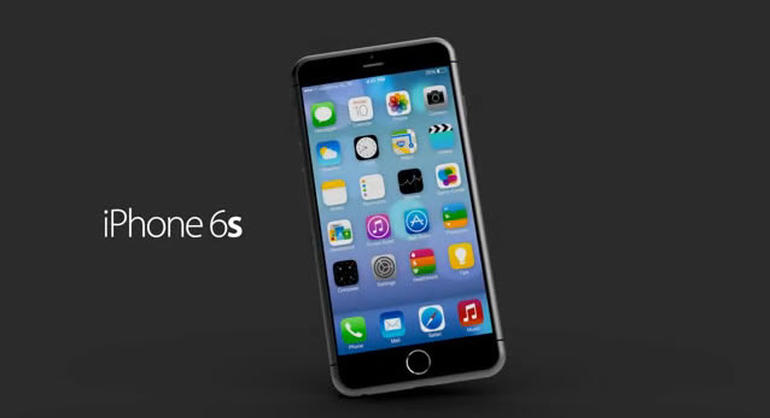
It already sounds like Apple is gearing up to ship out the iPhone 6 this September and possible even an iPhone 6s later this year. Their last two devices, the 4 and the 5, have already received the 's' treatment, so we could expect the same to happen for the 6. If Apple is going to have premium versions of the iPhone 6, it will definitely have a name variation, which could be the 's' at the end.


We will find out more details, come the iPhone 6 debut on September 9th. Until then, we have you covered on Facebook and Twitter.

Newest look at iPhone 6: 27 days remaining

The sooner we get to the release date of one of the most-anticipated devices of the year, the more leaks we will get. That has been the case today. We are now twenty-seven days from the expected debut of the iPhone 6, and phone modifier Feld & Volk are at it again.

Earlier this month, we got a look into what the iPhone 6's rear panel will look like. Feld & Volk has released images of the iPhone 5 before its release back in 2012, so we can affirm that this is legitimate. This time, we get our best look yet at the design of the front panel that will ship with the iPhone 6.


In these images you can see that Apple has made some changes from what we are used to. The front panel isn't the typical squared edge that we have seen on all previous iPhone models. This panel has a very subtle curve to it, which gives it an appearance of a thinner or non-existent bezel. In the age where everyone wants a bigger screen and less bezel, Apple has definitely nailed this one. 

This is our closest look at what is to come as far as physical buttons on the iPhone. We already know what to expect for the home-button, due to the existence of the iPhone 5s, but the side buttons have received a makeover. Apple is stepping away from their circular standard, and moving to the recessed oval design that is found on most smartphones. We don't know if this is the lock button, volume rockers, or both, but it looks sharp.

Be sure to follow us on Twitter and like us on Facebook for everything iPhone 6. With the debut date fast approaching, we will have it all covered, from announcements, leaks, and news. 

Feld & Volk can be seen here

New iPhone 6 images: Thanks to Spigen


One of the most successful and most popular phone case manufacturers, Spigen, has released an entire page solely dedicated to the upcoming iPhone 6. On this page it gives us one of the most realistic glimpses of what's to come.


This is a realistic look at what the iPhone 6 will look like. Spigen is a legitimate source for images of upcoming devices, seeing as they receive dummy units to fabricate their cases around. Images of the iPhone 6 will continue to trickle out ahead of its September 9th release. We'll keep you updated. 


iPhone 6 vs Galaxy Note 4: Who will come out on top?


As we approach the anticipated release of both the iPhone 6 and the Galaxy Note 4, the biggest battle in mobile phone history is upon us. Rumors are swirling more and more, leaving us wondering "Who will come out on top?" Apple plans to release their brand new iPhone with the biggest screen in their mobile phone history, while their adversary Samsung plans to release their phablet, the Galaxy Note 4 which is confirmed to have a QHD display and a metal chassis. One thing that we have learned from this battle already, Samsung and Apple love to hate each other. They also love to take each others ideas that are successful (Apple with the bigger screen and Samsung with the metal chassis). Both companies will move millions of devices, but only one manufacturer will come out on top.

iPhone 6: The iPhone 6 is expected to break a first for Apple, and come with a massive screen in Apple's standards. 4.7" have become the safe ground for smartphone manufacturers, it's not too small, yet it isn't too big. Apple has been conservative over the years with their phones because "why mess with what sells?" Now that iPhone's are considered the smallest phones by today's standards, Apple is calling for a change. They have already upped the original iPhone from a 3.5" screen to a 4" screen.

Along with a bigger screen, the iPhone 6 is coming with a new type of screen we haven't seen on a smartphone yet. Apple is going with a sapphire crystal glass composite that resists scratches more than a standard Gorilla Glass screen. The home button and the camera lens on the iPhone 5S is already composed of solid sapphire crystal that is extremely hard to scratch. This will definitely a huge selling point for the smartphone king.

Galaxy Note 4: The Galaxy Note 4 is also expected to break multiple firsts for Samsung, and come with a QHD display and a retina scanner and metal chassis. Samsung has always had vivid displays since the Galaxy S2 became a mainstay on the Android market. The Galaxy S4 was the first Samsung phone with a 1080p display and came with a massive 441 ppi. The kings in display are at it again making their resolution for the Note 4 for be an enormous 2560x1440 or 515 ppi. While they added a fingerprint to the S5, the were already trailing behind Apple.

To combat the iPhone head on, Samsung is also reported to be making their first device with a metal chassis. It is reported that Galaxy Note 4 will have at least one model with a metal design, but what market gets that is yet to be known. If this phone is released to the American market, this could be even a bigger feature than the QHD display.


Battle: While both phones are coming with new features, yet to be seen on the smartphone market, only one can win. Apple and Samsung have taken aim at one each other multiple times in the past and this will be no different. Apple has always remained on top, but Samsung has been catching up. Apple has kept the premium design a major feature of their devices while Samsung has been pushing displays over design. This September they will collide.

Surely Apple's .7" jump will be hugely successful, but it is missing one thing: 1080p resolution. The one thing Apple hasn't gotten right is not adding full 1080p resolution to their phones and it is trailing their competitors Google, HTC, Samsung, and Sony. While their phones have been made up of metal and glass for the premium feel, it hasn't had the premium screen. This is could be Apple's falling point with their new flagship device. Samsung will definitely take aim at that and continue to brag about their vivid displays, even more so than ever with a QHD display.

The Galaxy Note 3 was one of Samsung's most popular phones ever. It showed by outselling it's S4 counterpart. The reason it was so successful was the 5.7" 1080p screen. While the Galaxy Note 4's huge selling point will be the QHD display with the same 5.7" screen, it might bow down to the iPhone 6 unless it comes with a premium design. Many critics have griped about Samsung's unwillingness to use metal in their design and their sales trailing behind Apple are a major reason for that.

Conclusion: The two devices are likely to be majorly successful, just as their counterparts in the past, however this is the biggest battle either Apple or Samsung have ever seen. Apple is taking the right step by upping the display size to 4.7" and using a new sapphire crystal glass for the screen, but not adding 1080p resolution could be it's stumbling point. The Note 4's QHD display could make this the most popular Galaxy phone to date, but if it doesn't come with a premium design, it could fall even further behind Apple. Only time will tell, and this September we will see if things stay the same or we crown a new King of the smartphone market.

Will Apple retain it's title with the new iPhone 6 or will Samsung overtake them with the Galaxy Note 4. Only time will tell.

Follow us on Twitter @PhoneProbe

iPhone 6 to get Notification Light

The latest report for the iPhone 6 is that it will come with a stock notification light. This notification light won't be like other Android phones, with a small LED illuminating when a notification is received. The iPhone 6 will have the Apple logo on the rear of the phone illuminate when a user gets a text, missed call, etc. This is assumed to have multiple color tones, similar to that of Androids.

One of the hangups people have had with previous models of the  iPhones, is that when you get a text or missed call, you can't just glance at your phone to see if you have a notification. Apple does currently have an option for an the LED flash for the camera to blink when a text is received, however this is very bright and obnoxious for some.

The notification light being added to the  iPhone 6 is a big plus in the eyes of users. Now that Apple put the notification light not only on the phone, but in the Apple logo, that is something to brag about, and Apple will definitely push that as a 'premium' feature on their next flagship.

Don't forget to follow us on Twitter @PhoneProbe 

Latest on iPhone 6 and Galaxy Note 4

Galaxy Note 4: The latest news for the Galaxy Note 4 is that it will come with a Ultra Violet (UV) sensor that will be able to detect how much radiation the user will encounter. Samsung is expanding on their big 'health' push and continue to try to be more than a smartphone. With Apple's iOS focusing more on health, Samsung is trying to remain on top. The UV sensor will go along with the expected heart rate monitor and S Health on the Note 4.


Ever since the Galaxy S4, Samsung has been trying to invade our lives with more than just being a device for contact with others, it wants us to be in contact with ourselves. With the S4, it introduced the S Heath app which helped users track their diet, calculate BMI, and it came with a pedometer. The S5 improved Ilion that with the built in heart rate monitor (even though you can download an app from the app store). They improve upon that with a UV sensor that will measure the radiation in 5 increments. Low to extreme. One wonders if there will be a level the user can set to be warned when the radiation gets to a certain point. 

While some might welcome this gimmicky feature on the Galaxy Note 4, others will object to it. Whether or not the device will sell. Plus we're looking forward to the S6 with a blood pressure monitor (kidding). 

iPhone 6: The iPhone 6 is expected to ship with a sapphire crystal display, and some people have gotten their hands on it for scratch tests. The one thing we have found out, is that while there might be some composite of sapphire crystal in the glass, it is not entirely sapphire. If it were to be entirely sapphire, it would actually be more rigid and prone to breaking. Along with that, it would also increase the cost of the device dramatically.


On the iPhone 5S, the home button is actually made entirely of sapphire crystal. It is small enough to not change the cost of the device and resists breaking. Apple choose the sapphire crystal for the home button over regular glass because of the importance of keeping a clear picture for the fingerprint scanner. The last thing someone wants is to be locked out of their device because their home button is scratched. 

The sapphire display is a welcome innovation to challenge Gorilla Glass for the top displays on the market. The question is, will Apple make this catch on? We will find out when the iPhone 6 releases this September.